
A fleeting moment of love rediscovered, “The Last Time I Felt Like This” lingers as a gentle reminder that even the briefest encounters can leave an everlasting imprint on the heart.
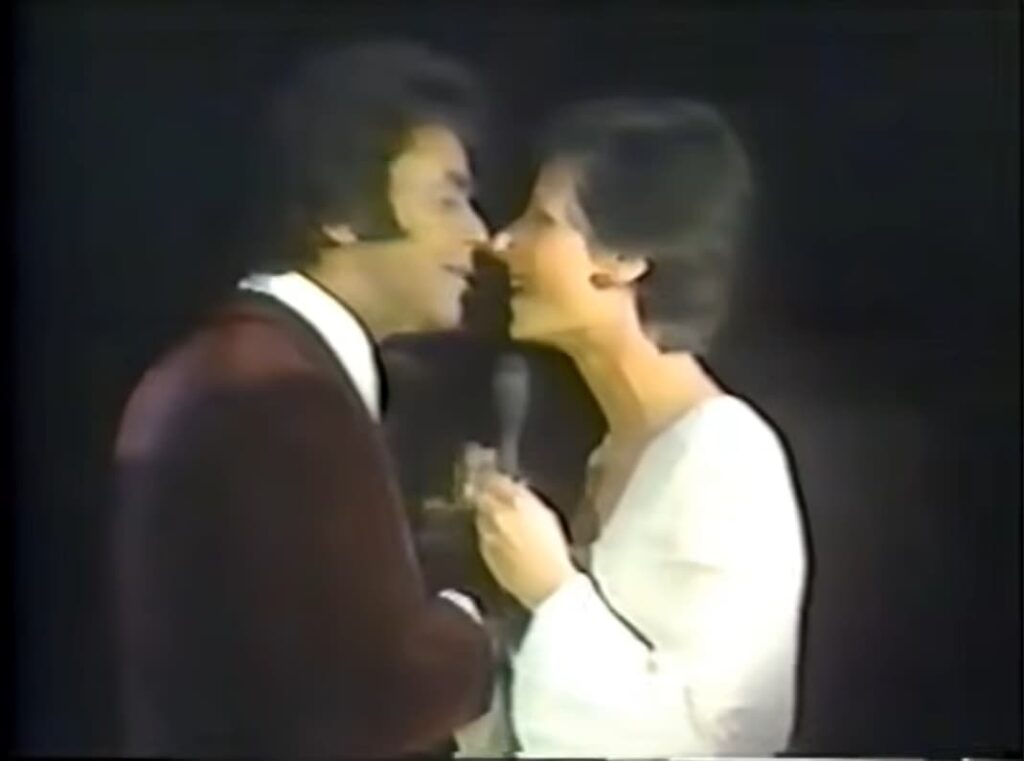
There are performances that pass by as part of an awards ceremony’s long tradition, and then there are those rare, quietly luminous moments that seem to suspend time itself. The appearance of Johnny Mathis and Jane Olivor at the 1979 Academy Awards belongs unmistakably to the latter. On that elegant evening, they delivered a tender rendition of “The Last Time I Felt Like This”, a song nominated for Best Original Song from the film Same Time, Next Year (1978). Though it did not ultimately win the Oscar, losing to “Last Dance” from Thank God It’s Friday, its emotional resonance has endured far beyond the outcome of that night.
Written by the distinguished songwriting trio Marvin Hamlisch, Alan Bergman, and Marilyn Bergman, the song carries all the hallmarks of their craftsmanship: a melody that unfolds with graceful inevitability, and lyrics that speak with quiet intimacy about love, time, and the fragile intersections of human connection. In the context of the film, which tells the story of two people who meet just once a year over decades, the song becomes a delicate emotional thread—binding together moments that are both fleeting and eternal.
When Johnny Mathis and Jane Olivor stepped onto the Oscars stage, they brought with them not just technical excellence, but a profound sensitivity to the song’s inner life. Mathis, already revered for his silken phrasing and understated emotional delivery, approached the piece with characteristic restraint. His voice did not seek to dominate; rather, it invited the listener inward, as though sharing a private memory. Olivor, with her crystalline tone and introspective style, complemented him beautifully. Together, they created a dialogue—two voices meeting, parting, and meeting again, much like the lovers in the film itself.
Although the original recording by Johnny Mathis and Jane Olivor achieved modest chart success—reaching No. 15 on the Billboard Adult Contemporary chart—it was never intended as a chart-topping spectacle. Instead, it found its place among listeners who valued nuance over grandeur, those who understood that some songs are not meant to dazzle, but to linger.
What gives “The Last Time I Felt Like This” its enduring power is its meditation on time’s elusive nature. The lyrics do not promise permanence; they acknowledge impermanence with a quiet acceptance. “This is the last time I’ll fall in love,” the song suggests—not as a declaration of finality, but as a recognition of how rare and precious such moments truly are. It speaks to the idea that certain feelings cannot be replicated, only remembered. The late 1970s, a period often associated with the rise of disco and changing musical tastes, still held space for songs like this—songs that whispered rather than shouted. In that landscape, Johnny Mathis remained a steadfast guardian of romantic balladry, while Jane Olivor brought a deeply personal, almost confessional quality to her performances. Their collaboration here feels less like a commercial endeavor and more like an artistic convergence.
Looking back, the 1979 Oscars performance carries an added layer of poignancy. It reminds us of a time when music on such grand stages could still feel intimately human, when a simple duet could hold an audience in quiet reflection. There were no elaborate theatrics, no overwhelming spectacle—just two voices, a melody, and the shared understanding of something deeply felt yet difficult to articulate. And perhaps that is why the song continues to resonate. It does not rely on nostalgia alone, but on something deeper: the recognition that life is made up of moments we cannot hold onto, only revisit in memory. In the gentle interplay between Johnny Mathis and Jane Olivor, we hear not just a song, but an echo of those moments—soft, fleeting, and impossibly beautiful.