
A gentle inventory of joy where simple pleasures become a lifelong refuge against passing storms
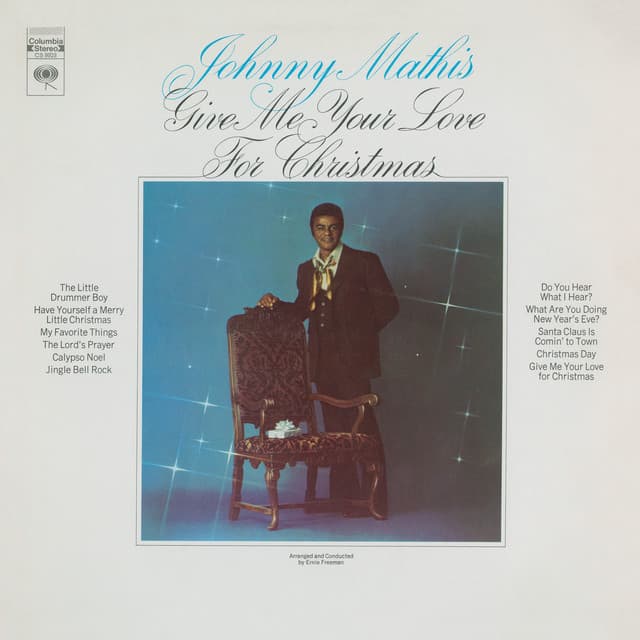
When Johnny Mathis recorded “My Favorite Things”, he transformed a familiar show tune into something quietly enduring, a song that would live far beyond the stage and settle deeply into the personal histories of listeners across decades. Released in 1961 as part of his album Heavenly, Mathis’s version arrived during one of the most luminous periods of his career, a time when his voice had become synonymous with warmth, reassurance, and emotional clarity. Though the song was not issued as a major pop single for him, the album itself reached No. 10 on the Billboard Pop Albums chart, confirming Mathis’s continued dominance as one of America’s most trusted interpreters of romantic and reflective material.
Originally written by Richard Rodgers and Oscar Hammerstein II for The Sound of Music, “My Favorite Things” already carried the gentle philosophy of finding comfort in small, everyday joys. Yet Mathis approached the song not as a theatrical moment but as a personal meditation. His rendition strips away the sense of performance and replaces it with intimacy. From the opening phrase, his voice floats rather than declares, suggesting not a list recited aloud, but thoughts quietly revisited in the mind when the world grows heavy.
The arrangement chosen for Mathis’s version is elegant in its restraint. Light orchestration surrounds his vocal, allowing space for reflection rather than spectacle. There is no urgency in the tempo, no dramatic swell demanding attention. Instead, the music moves at the pace of memory itself, unhurried, deliberate, and sincere. Each phrase feels carefully placed, as though Mathis understands that the power of the song lies not in volume or bravura, but in recognition. These are not extravagant dreams. These are small comforts, modest pleasures, and that is precisely why they endure.
At this stage in his career, Johnny Mathis was already celebrated for his ability to bridge popular music and the Great American Songbook. His interpretation of “My Favorite Things” fits perfectly within that legacy. He does not alter the melody or attempt to modernize its structure. Instead, he leans into its emotional truth, trusting that sincerity will outlast trend. In doing so, he offers something timeless, a song that feels as relevant in quiet moments today as it did when first recorded.
The deeper meaning of “My Favorite Things” becomes clearer with time. It is not merely a cheerful catalog of pleasant images. It is a philosophy of survival. When the song speaks of remembering favorite things when feeling sad, it suggests an inner discipline, a gentle act of resilience. Mathis delivers this message without instruction or insistence. His voice implies understanding rather than advice, as though he has already walked through difficult seasons and discovered that comfort often arrives disguised as memory.
This quality resonated strongly with audiences who had come to trust Mathis not only as a singer, but as a companion during reflective hours. His voice became associated with evenings, with solitude softened by music, with moments when the noise of the world finally receded. In that context, “My Favorite Things” feels less like a Broadway tune and more like a personal ritual, a reminder that joy does not vanish, it waits patiently to be remembered.
The song’s lasting presence in seasonal playlists and reflective compilations owes much to Mathis’s interpretation. While other versions sparkle with playful energy, his glows with quiet assurance. It does not chase happiness. It remembers it. That distinction gives the song its emotional gravity and its enduring appeal.
Looking back, Johnny Mathis singing “My Favorite Things” feels like an artist offering a gentle gift rather than a performance. It is a reminder that music can be a place of refuge, that beauty often resides in simplicity, and that the most valuable things are not always grand or dramatic, but familiar and deeply felt. In a world that constantly urges forward motion, this recording invites stillness, and within that stillness, the comforting realization that what once brought joy can continue to do so, quietly, faithfully, and without demand.