
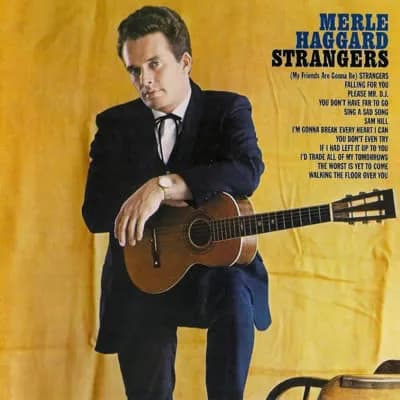
Merle Haggard – Going Where The Lonely Go: A Somber, Jazzy Journey Into the Quiet Sanctuary of a Solitary Heart
In the autumn of a long, storied career, Merle Haggard released what many critics consider his most beautifully resigned masterpiece, a song that doesn’t just describe loneliness but creates a physical space for it to reside. Released in October 1982 as the title track and lead single of his album Going Where the Lonely Go, this track was an immediate anchor for the weary. It climbed with a steady, inevitable grace to reach the Number 1 spot on the Billboard Hot Country Singles chart in January 1983, marking the 28th time The Hag stood at the pinnacle of the charts. For those of us who have lived through the shifts of the decades, this song remains a sophisticated refuge—a piece of “nightclub country” that feels as much like a jazz standard as it does a rural lament.
The story of the song is one of deep friendship and shared observation. Merle Haggard co-wrote this iconic piece with Dean Holloway, his long-time friend, driver, and personal assistant. Holloway reportedly provided the evocative title, and Haggard, ever the poet of the displaced, immediately found the soul within those words. At the time of its recording, Haggard was leaning into a smoother, more refined production style, moving away from the “Bakersfield Sound” grit of his youth and toward a velvet-textured maturity. It features a weeping saxophone and a soft, walking bassline that perfectly complements his weathered, effortless baritone. It is the sound of a man who has stopped fighting the world and has instead decided to find peace within his own solitude.
The lyrical depth of “Going Where The Lonely Go” resonates with a profound, quiet truth that only comes with age. It isn’t a song about the sharp, sudden sting of a breakup; rather, it’s about the long-term, low-thrumming frequency of being alone. When Haggard sings, “Rolling with the flow / Going where the lonely go,” he is describing a voluntary disappearance. It is a song for the moments when the noise of the world becomes too much, and the only comfort is found in the company of others who are similarly lost in thought. For a mature audience, this speaks to the “invisible” times of life—the hours spent in reflection, the quiet corners of old familiar bars, or the long drives where the destination matters less than the distance traveled.
What makes this track so hauntingly beautiful is its lack of judgment. It doesn’t offer a cure for loneliness, nor does it ask for pity. Instead, it offers validation. It acknowledges that there is a specific geography for the broken-hearted and the solitary, a place where the lights are low and the music understands your silence. As we look back on the legacy of Merle Haggard, we see a man who spent his life articulating the struggles of the human spirit. In “Going Where The Lonely Go,” he gave us a map to that quiet inner sanctuary. It remains a timeless, elegant tribute to the “hobo” soul that lives inside us all, reminding us that even when we are most alone, we are part of a vast, silent brotherhood of the lonely. It is a masterclass in emotional honesty, delivered with the dignified restraint that only a true legend could command.
 Music Legend