
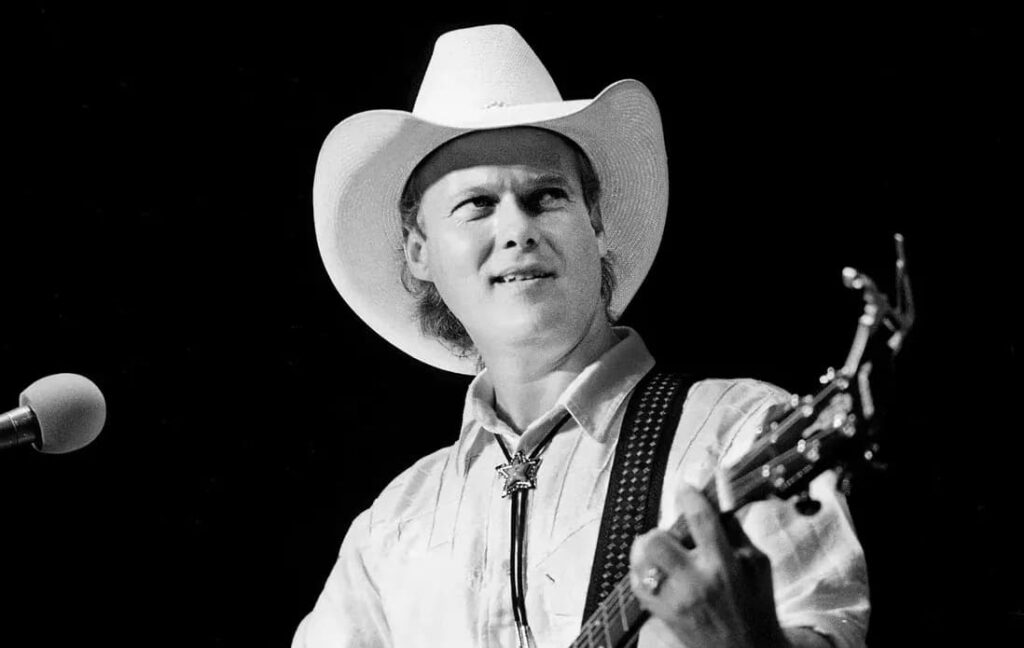
A Testament of Steadfast Faith Echoing Through the Long Corridors of American Gospel
In 1992, Ricky Van Shelton released his deeply personal gospel album Don’t Overlook Salvation, a project that stood apart from his chart-topping country successes and revealed a quieter, more contemplative side of his artistry. Nestled within its tracklist is his stirring interpretation of “I Shall Not Be Moved,” a traditional spiritual long woven into the fabric of American sacred music. Although the song itself predates commercial charts and thus carries no formal placement in Billboard records, its legacy far surpasses what numerical rankings could ever convey. Shelton’s rendition delivered at the height of his visibility as one of country music’s most resonant voices became a defining moment in his catalogue, reminding audiences that faith, when sung with honesty and reverence, transcends genre, era, and expectation.
To understand the power of Shelton’s version, one must first acknowledge the hymn’s enduring roots. “I Shall Not Be Moved” has traveled through the American experience for more than a century sung in churches, woven into labor movements, and carried on the tongues of congregations whose voices rose not for spectacle but for survival. The song’s central image “like a tree that’s planted by the water” is among the most enduring metaphors in spiritual music: the vision of a faith so deeply rooted that no storm, no tide, no shifting world can unsettle it. When Shelton included the hymn on Don’t Overlook Salvation, he wasn’t merely revisiting a tradition; he was re-anchoring himself within it.
What distinguishes Shelton’s performance is the quiet intentionality of his delivery. Known for his smooth baritone capable of both vulnerability and steel he approaches the hymn without ornamentation, allowing the lyrics to breathe with the plainspoken dignity they were born from. His phrasing is deliberate, almost pastoral, as though he is less a performer and more a witness. In an era when country music production was growing increasingly polished, Shelton chose instead to honor the hymn’s original simplicity. This choice becomes an artistic statement: faith needs no flourish; truth requires no adornment.
The emotional architecture of Shelton’s recording lies in its steadfastness. Each repetition of the refrain becomes a reaffirmation, a gentle accumulation of conviction. The instrumentation rooted in traditional gospel textures creates a sonic space where the hymn’s message can settle into the listener like a soft but immovable certainty. The effect is not rousing in the sense of revivalist fervor; rather, it is grounding, comforting, and profoundly human. It recalls the small-town churches of the rural South, where a song like this could carry an entire room from despair to hope with nothing more than the collective strength of voices risin
Within Shelton’s career, “I Shall Not Be Moved” stands as a reminder that some of his most meaningful work emerged not from the country charts but from the spiritual wellsprings that shaped his earliest musical memories. In revisiting this hymn, Shelton reconnected listeners to the timeless notion that faith quiet, unwavering, unshakable remains one of the most powerful forces ever set to music.
 Music Legend