
A Vision of Faith Where Sorrow Has No Address and Love Leaves No Trace of Tears
When Ricky Van Shelton stepped forward to perform “Tears Will Never Stain the Streets of That City”, he was not merely covering a gospel standard. He was entering a sacred lineage of American music shaped by faith, endurance, and the quiet assurance of hope beyond earthly struggle. The song itself occupies a revered place in gospel history, written by the legendary Dottie Rambo, one of the most influential gospel songwriters of the twentieth century, and first recorded by The Imperials in 1980.
Upon its release, “Tears Will Never Stain the Streets of That City” rose swiftly to the top of the gospel world. The Imperials’ recording reached No. 1 on the Billboard Hot Gospel Songs chart, becoming one of the defining gospel anthems of the early 1980s. It was later included on their Grammy winning album Heed the Call, further cementing the song’s legacy as both a commercial and spiritual triumph. From church pews to concert halls, the song found a lasting home among listeners who understood sorrow intimately and faith personally.
The story behind the song is inseparable from Dottie Rambo’s own life. Born in Kentucky and raised in deep poverty, Rambo knew hardship not as an abstraction but as a daily companion. She wrote songs not from theology books but from lived experience. Loss, illness, financial struggle, and spiritual doubt all shaped her writing. When she penned “Tears Will Never Stain the Streets of That City”, she was offering a vision of heaven not as grandeur alone, but as relief. A place where grief finally releases its grip. A place where the weight carried quietly for decades is at last laid down.
Lyrically, the song paints heaven in simple, deeply human terms. It does not rely on ornate imagery or elaborate metaphor. Instead, it speaks plainly of streets untouched by sorrow, faces unmarked by pain, and hearts finally at rest. That simplicity is its strength. The song resonates because it speaks to lives already lived, not lives imagined. It acknowledges suffering without dwelling in it, and offers hope without sentimentality.
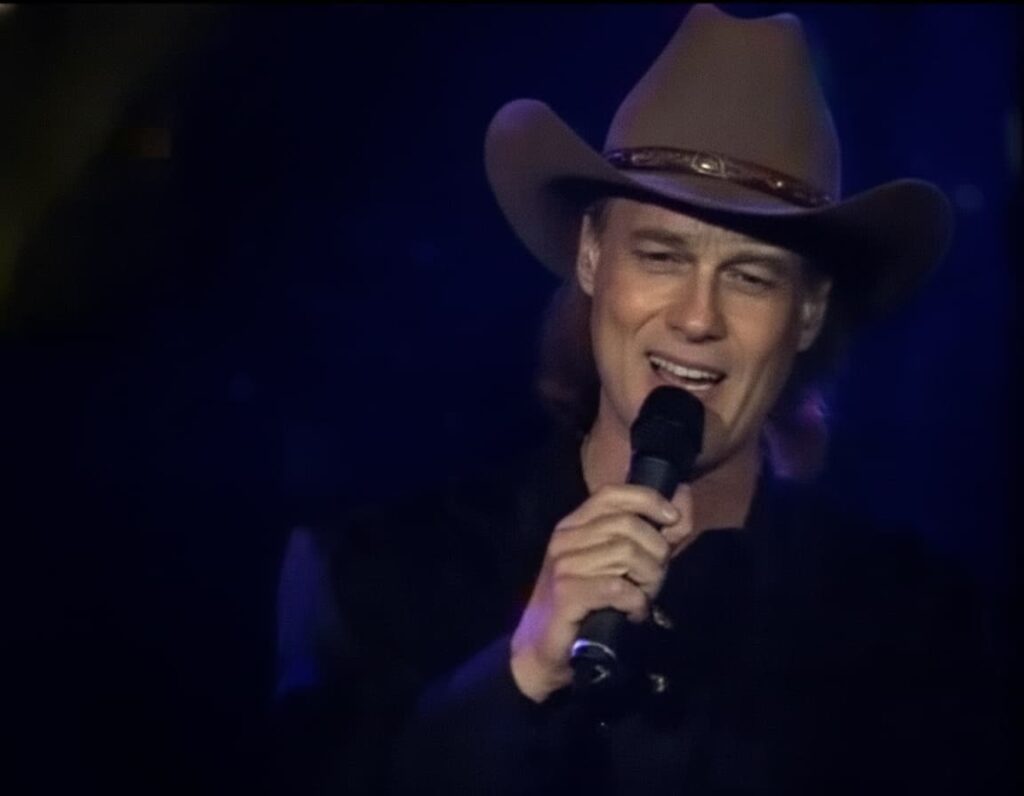
Ricky Van Shelton, known primarily for his towering presence in late 1980s and early 1990s country music, approached the song with reverence and restraint. His tribute performance to Dottie Rambo stands apart from his chart-topping hits like “I’ll Leave This World Loving You” or “Statue of a Fool”. Here, there is no pursuit of radio appeal or crossover success. Instead, Shelton delivers the song as a confession of belief and respect. His voice, naturally warm and unforced, carries the lyrics with humility, allowing the message to lead rather than the singer.
What makes Shelton’s performance especially affecting is the alignment between singer and song. By the time he performed this tribute, Shelton had already stepped away from the relentless machinery of fame. He understood the cost of success, the exhaustion of constant expectation, and the quiet longing for peace that arrives later in life. In that context, “Tears Will Never Stain the Streets of That City” becomes more than a hymn. It becomes a personal statement.
The song’s enduring power lies in its refusal to age. Decades after its chart success, it continues to appear in memorial services, gospel concerts, and quiet moments of reflection. It speaks most strongly to those who have accumulated memories both joyful and painful. Not because it reminds of what was lost, but because it gently suggests that loss is not the final chapter.
In honoring Dottie Rambo, Ricky Van Shelton also honors a tradition of American music where faith and storytelling walk hand in hand. “Tears Will Never Stain the Streets of That City” remains a testament to the idea that some songs are not written for a moment, but for a lifetime.
 Music Legend