
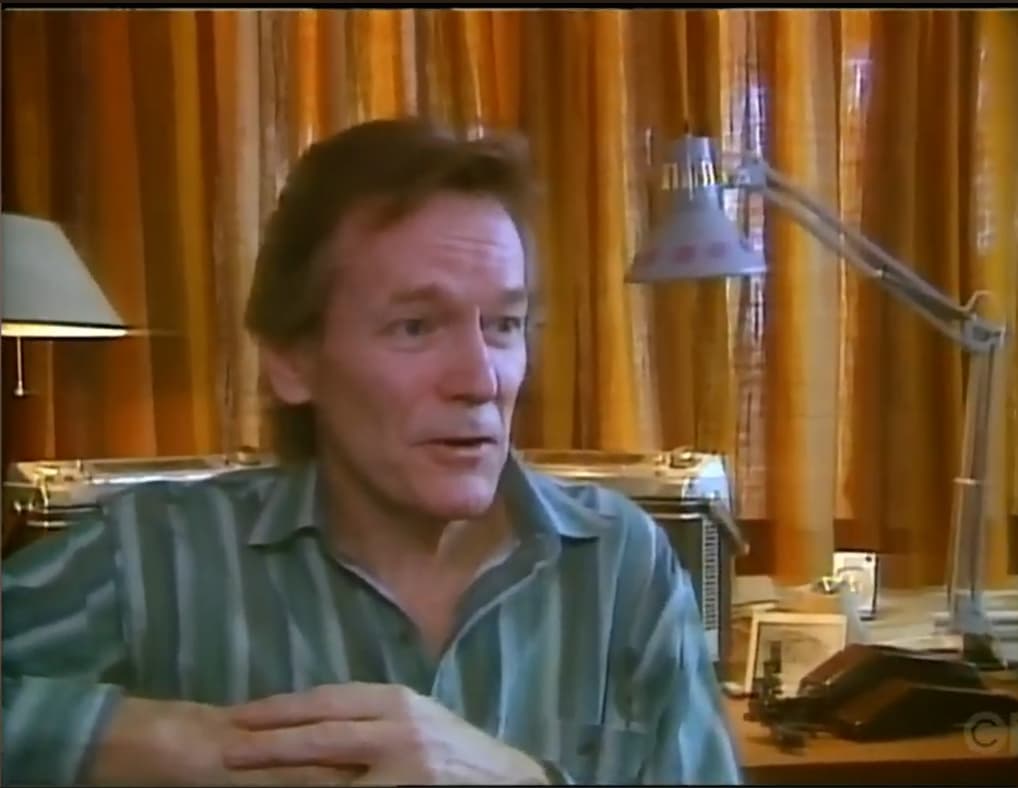
A rare window into the soul of a private troubadour—Gordon Lightfoot reflects on fame, solitude, and the quiet cost of a life in music
In 1993, audiences were given something exceedingly uncommon: an intimate and revealing conversation with Gordon Lightfoot, a man whose music had long spoken volumes, yet whose personal life remained largely shielded from public view. In this thoughtful sit-down with Sandie Rinaldo, viewers were invited beyond the familiar melodies and into the reflective inner world of one of Canada’s most revered singer-songwriters.
By the time of this interview, Lightfoot was already a towering figure in North American folk and pop music. His legacy had been firmly established through timeless compositions like “If You Could Read My Mind”, “Sundown”, and “The Wreck of the Edmund Fitzgerald”—songs that not only charted impressively but became woven into the cultural fabric of a generation. “Sundown,” for instance, reached No. 1 on the Billboard Hot 100 in 1974, while “The Wreck of the Edmund Fitzgerald” climbed to No. 2 in 1976. These were not merely commercial successes; they were narrative landmarks, each carrying a distinct emotional weight and storytelling depth.
And yet, despite such public acclaim, Gordon Lightfoot remained an intensely private individual. This contrast forms the emotional backbone of the 1993 interview. Sitting across from Sandie Rinaldo, he appears composed, measured, and introspective—never eager to reveal too much, but willing, in rare moments, to let the guard slip just enough. There is a quiet dignity in the way he speaks, as though every word has been carefully considered, much like the lyrics he has penned throughout his career.
The conversation gently navigates through his life beyond the stage—touching on relationships, the pressures of fame, and the solitude that often accompanies artistic success. Lightfoot acknowledges, without dramatics, the personal costs of his career. Years spent touring, the strain on family life, and the emotional toll of constant movement all surface in understated reflections. There is no bitterness in his tone, only a sense of acceptance, perhaps even reconciliation with the choices that shaped his path.
What becomes evident is that the emotional honesty found in his music is not crafted—it is lived. The same sensitivity that gave rise to “If You Could Read My Mind” is present in his spoken words, though expressed more cautiously. He does not romanticize his journey. Instead, he offers a grounded perspective, one that recognizes both the privilege and the burden of a life devoted to music.
Sandie Rinaldo’s approach plays a crucial role in this exchange. Her questions are neither intrusive nor superficial; they are patient, allowing space for silence and reflection. This creates an atmosphere where Lightfoot feels at ease, even if only momentarily stepping outside his usual reserve. It is in these quiet pauses, as much as in his answers, that the depth of the man reveals itself.
The early 1990s marked a period of reflection for many artists of Lightfoot’s generation. The musical landscape had shifted dramatically, yet his work endured—perhaps because it was never tied to fleeting trends. In the interview, there is a subtle awareness of time passing, of chapters closing and others quietly continuing. Lightfoot does not speak of reinvention; instead, he embodies continuity—a steady presence in an ever-changing world.
Watching this rare glimpse into his private life, one begins to understand that the restraint he maintained offstage was not a barrier, but a form of preservation. By keeping parts of himself hidden, he allowed his songs to carry the emotional weight. And those songs, in turn, became deeply personal for listeners, precisely because they were not over-explained.
The 1993 interview with Gordon Lightfoot is not filled with dramatic revelations or headline-making confessions. Its value lies elsewhere—in its subtlety, its honesty, and its quiet respect for a man who chose to let his music speak first. It reminds us that sometimes, the most profound stories are not the ones loudly told, but the ones carefully, almost reluctantly, shared.
And in that gentle exchange between artist and interviewer, we are left with something rare: not just an understanding of the musician, but a fleeting sense of the man behind the melodies.