
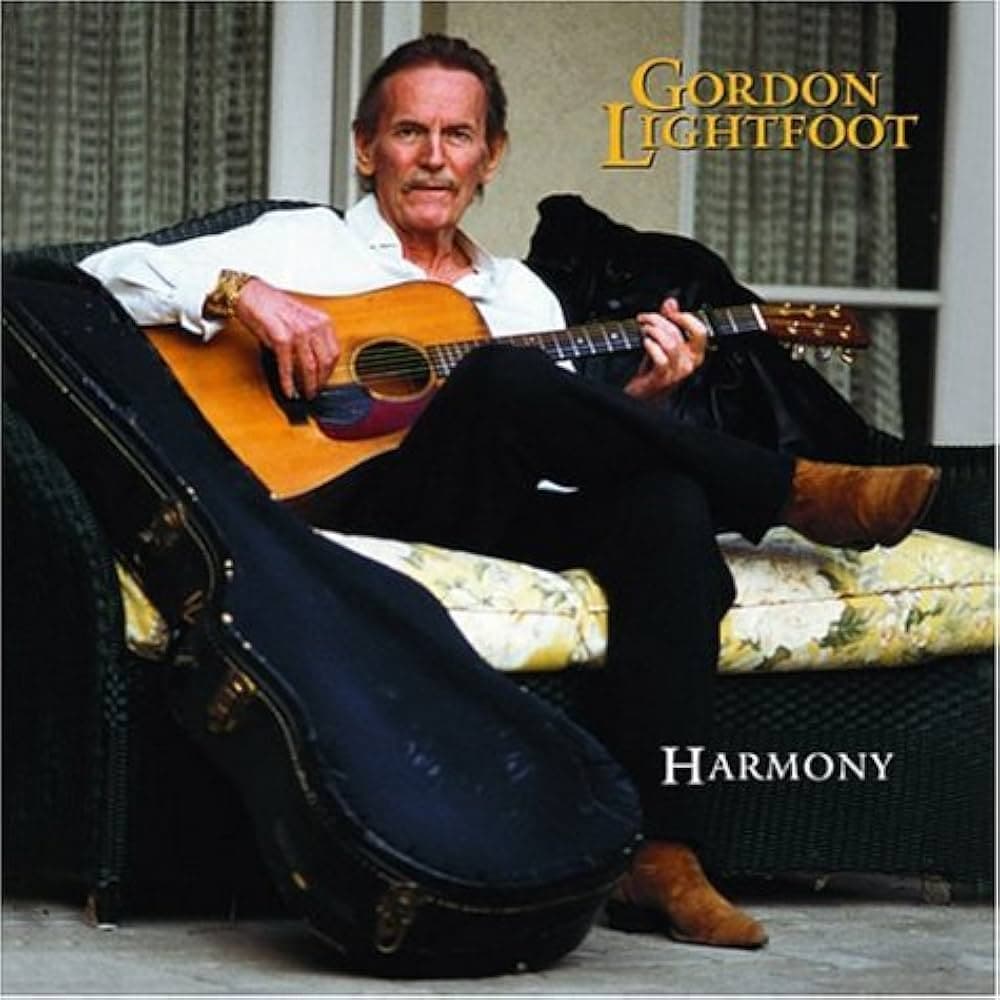
A voice that carried rivers, railways, and restless hearts—now fallen silent, yet echoing forever through time
The passing of Gordon Lightfoot at the age of 84 marks not merely the end of a life, but the quiet closing of one of the most enduring chapters in modern folk music. Widely regarded as Canada’s greatest songwriter and one of the true architects of folk-rock, Gordon Lightfoot leaves behind a body of work that was never bound by trends, but instead rooted deeply in storytelling, place, and emotional truth. His death, following the cancellation of his 2023 tour due to health-related issues, feels less like a sudden departure and more like the final note of a long, contemplative song—one that had been unfolding for decades.
To understand the weight of this loss, one must return to the remarkable consistency of his career. Unlike many of his contemporaries, Lightfoot did not rely on fleeting popularity. His music endured because it spoke to something essential. His 1970 masterpiece, “If You Could Read My Mind”, reached No. 5 on the Billboard Hot 100 and became an international success, while “Sundown” (1974) would later climb to No. 1, securing his place firmly within the mainstream without ever compromising his artistic identity. Even “The Wreck of the Edmund Fitzgerald” (1976), a haunting narrative ballad, reached No. 2 on the Billboard Hot 100, proving that deeply introspective storytelling could still resonate widely.
But chart positions alone cannot explain the significance of Gordon Lightfoot. His songs were not merely composed—they were inhabited. There is a sense, when listening to his work, that each lyric has been lived, each melody carefully shaped by memory and observation. He wrote of landscapes and journeys, of love and distance, of moments both ordinary and profound. And in doing so, he created a musical language that felt both personal and universal.
Fellow musicians recognized this rare quality. Bob Dylan once famously said that when he heard a Gordon Lightfoot song, he wished “it would last forever.” It is a sentiment that now carries even greater poignancy. For in many ways, Lightfoot’s songs do continue—long after the final chord, long after the voice itself has faded.
There was always a quiet dignity in his presence. Unlike many artists who sought the spotlight, Lightfoot seemed content to let the music speak. His performances were never about spectacle. Instead, they invited the listener inward, into a space of reflection. A simple acoustic arrangement, a steady voice, and suddenly an entire world would unfold—railways stretching across vast distances, ships battling unseen forces, lovers separated by circumstance.
His later years were marked by resilience. Even as health challenges emerged, he continued to perform, to write, to remain connected to the craft that had defined his life. The cancellation of his 2023 tour was met not with disappointment, but with quiet understanding. There was a sense that he had already given so much—that every note, every lyric, had been offered with sincerity.
Now, with his passing, what remains is not silence, but a vast and resonant legacy. Songs like “Early Morning Rain”, “Carefree Highway”, and “If You Could Read My Mind” are not bound to any single era. They exist outside of time, carried forward by those who continue to listen, to remember, and to feel.
There is something deeply comforting in that continuity. For while the man himself is gone, the essence of Gordon Lightfoot—his voice, his words, his unmistakable sense of place—remains. It lingers in the quiet moments, in the spaces between thoughts, in the soft echo of a melody remembered without effort.
In the end, his life’s work feels less like a collection of songs and more like a long, unbroken conversation—one that speaks of longing, of resilience, of the passage of time. And though that voice has now fallen silent, the conversation continues.
Softly. Steadily. On and on.